Boston’s Museum of Fine Arts is an institution with a storied past and impressive collections, boasting over 450,000 works of art housed in a city block-spanning granite building that combines the original 1907 neoclassical structure with a number of wings and additions designed by architects including I.M. Pei, Foster + Partners (London), and Hugh Stubbins, who also designed UMass Amherst’s Southwest Residential Complex. The collections housed within its numerous galleries offer a diverse range of objects, spanning from ancient Near Eastern, Egyptian, and Nubian art, to abstract modern sculpture, to a dizzying array of decorative arts and material culture from both the Americas and further afield. The MFA’s Art of the Americas addition, which opened in 2010, is home to a number of works by Winslow Homer, Mary Cassatt, Edward Hopper, Georgia O’Keeffe, and John Singer Sargent (including a set of intricate frescos he painted for the Museum’s rotunda and associated colonnades), in addition to a wide selection of decorative homewares, furniture, musical instruments, and, in true Boston fashion, a not-insignificant number of pieces of Paul Revere silver.
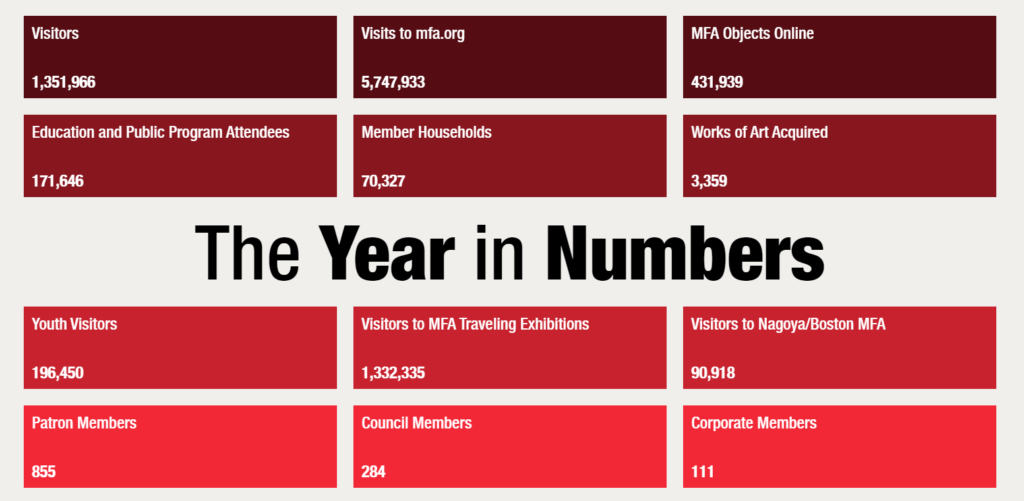
The MFA’s 2019 Annual Report offers a tidy snapshot of visitor counts, membership numbers, and the state of the collections. Of particular note are the 1,351,966 visitors to the museum’s physical location along Huntington Ave., the 5,747,933 visitors to mfa.org, and an impressive 431,939 objects available to be searched digitally through MFA Objects Online.
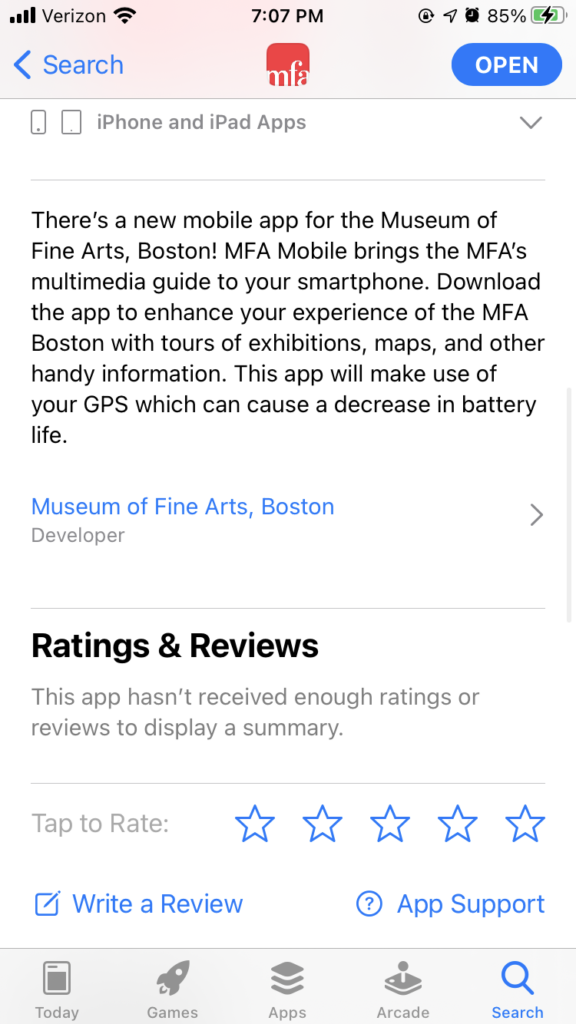
The MFA is unquestionably one of my favorite places to spend an afternoon in Boston (though the $25 cost of standard admission [$30 with admission to special exhibits] and the museum’s somewhat mixed record on confronting racism recently certainly provide some incredibly valid points for critique), and I have been utilizing MFA Objects Online in my own research and work since 2012, and watching the scope of their digitally-available content expand over the years has been wonderful to see. With this in mind, I was very excited to see that they had just recently launched MFA Mobile in October 2020, which the website describes as “a new way to experience the Museum,” where visitors can “access information, maps, and interpretive content” on their smartphones.
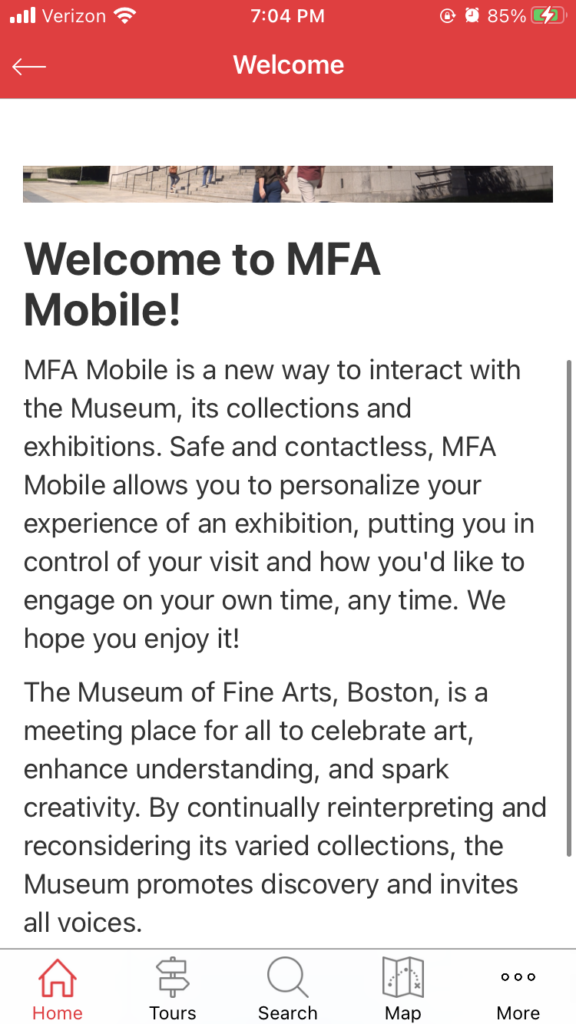
Well… it certainly is a new way to experience precisely three of the MFA’s current exhibitions, but not much else. For a sleek, modern-looking mobile app that launched in 2020, I was surprised and more than a little disappointed to discover that there is very little substantive content on offer, despite the chipper tone on the app’s welcome screen.
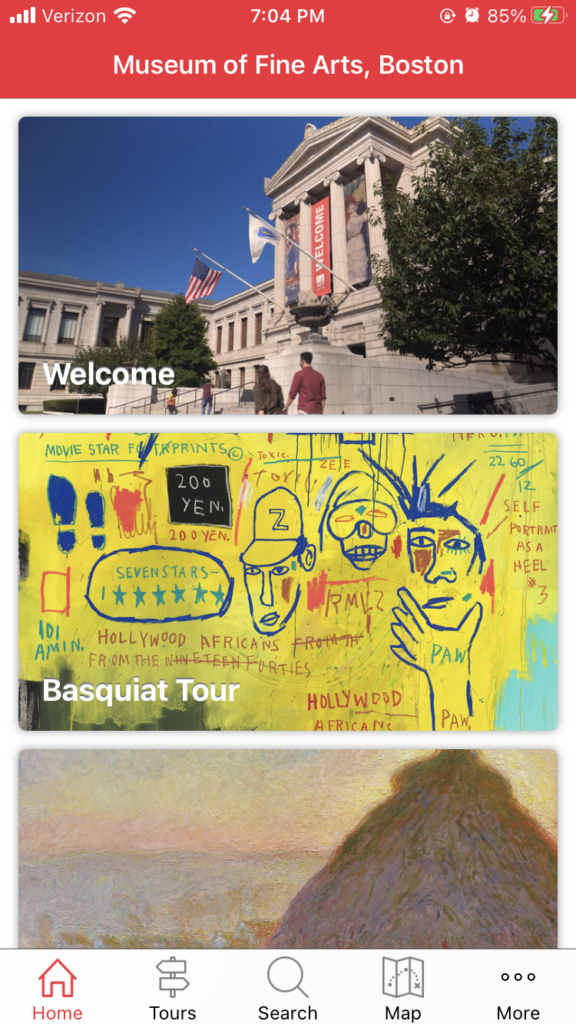
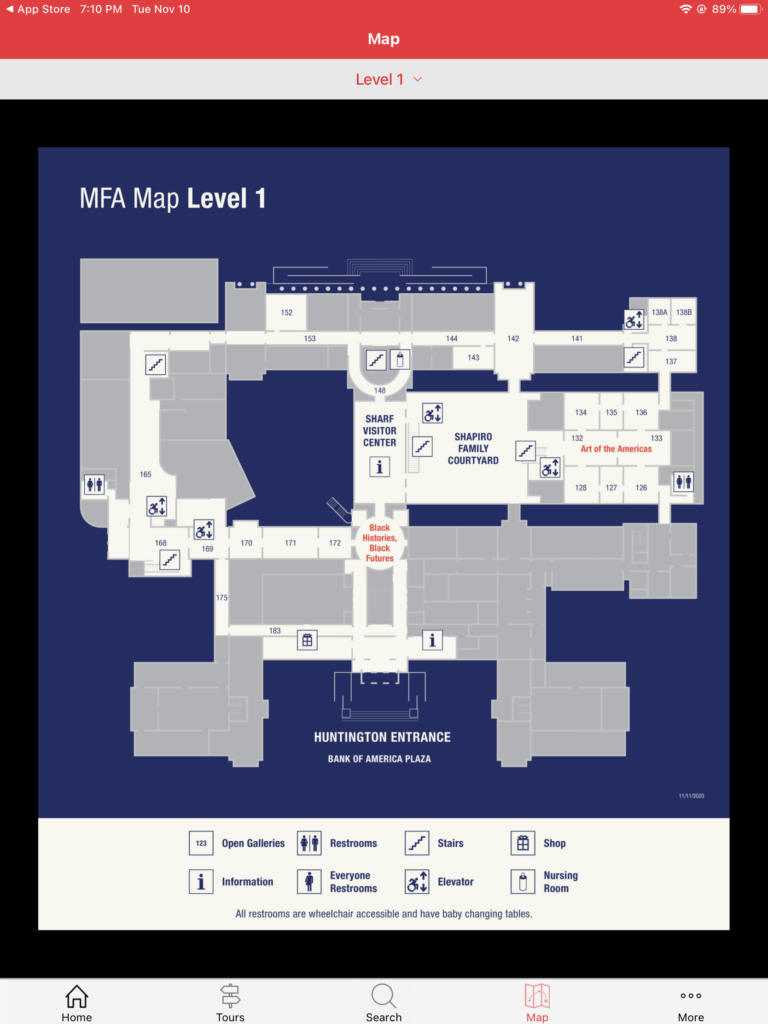
Presently, the app’s main features are three tours associated with current exhibits – Writing the Future: Basquiat and the Hip-Hop Generation; Monet and Boston: Lasting Impression; Cézanne: In and Out of Time – and a map of the museum’s four visitor-accessible floors. To me, the map is the most crucial component, for practical reasons. In a better time, I was a devoted user of the Museum’s map, which was vital for plotting out optimal routes through the galleries, preferably with as little back-tracking or walking through “empty space” as possible. Currently, however, a significant number of the MFA’s smaller gallery rooms have been closed to visitors due to public health concerns, which creates the need for an updated map for both new visitors and those who frequently return (members or otherwise) whose “mental maps” of the space have been disrupted. Using the map is a fairly straightforward process, which primarily replicates the same content of the paper version, with the added bonus that you are almost certainly unlikely to accidentally leave this map on some stray gallery bench or bathroom counter.